Author

admin

Browsing

Pakistan’s defense minister declared an ‘open war’ with Afghanistan on Friday after the two sides exchanged heavy fire along their shared border on Thursday, according to multiple reports.

Defense Minister Khawaja Mohammad Asif said in a post on X that Pakistan had hoped the Taliban would bring stability after NATO’s withdrawal, but instead accused the group of turning Afghanistan ‘into a colony of India’ and ‘exporting terrorism.’

‘Our patience has now run out. Now it is open war between us,’ he said.

The clashes came after the Taliban said it launched retaliatory strikes on Pakistani military positions, while Islamabad said it was responding to unprovoked fire in the area.

Reuters reported that both forces clashed for more than two hours along their roughly 2,600-kilometer (1,615-mile) border, threatening a ceasefire that had been agreed to in 2025 after fighting.

Thursday’s flare-up came after Pakistani forces carried out airstrikes inside Afghanistan earlier this week, with Taliban officials saying the strikes killed at least 18 people, Reuters reported Feb. 24.

Pakistan said it targeted militant hideouts and rejected claims that civilians were targeted.

The Taliban described an ‘extensive’ military operation against Pakistani army positions in response to the strikes.

‘In response to repeated provocations, extensive preemptive operations have been launched against Pakistani military positions along the Durand Line,’ Taliban spokesperson Zabihullah Mujahid wrote on X.

 In a separate statement, he said ‘specialized laser units’ were operating at night.

Taliban military spokesman Mawlawi Wahidullah Mohammadi also said in a video shared with Reuters that the ‘retaliatory operation’ began Thursday evening.

Mujahid said ‘numerous’ Pakistani soldiers had been killed and some were also captured. Reuters said it could not independently verify those claims.

In another post on X, Mujahid said, ‘The cowardly Pakistani army has bombed some places in Kabul, Kandahar, and Paktia. Praise be to God, no one was harmed.’  

Pakistan has since rejected the Taliban’s account. 

The Ministry of Information and Broadcasting said on X that the Afghanistan Taliban’s ‘unprovoked action along the Pakistan-Afghanistan border’ was given an ‘immediate and effective response.’

The ministry said Taliban forces had ‘miscalculated and opened unprovoked fire on multiple locations’ along the border in Khyber Pakhtunkhwa province.

The post said the fire was being met with an ‘immediate and effective response by Pakistan’s security forces.’

‘Early reports confirm heavy casualties on the Afghan side with multiple posts and equipment destroyed,’ the ministry said. 

‘Pakistan will take all necessary measures to ensure its territorial integrity and the safety and security of its citizens.’

Pakistani security sources also told Reuters that 22 Taliban personnel had been killed, and several quadcopters were shot down.

The fighting follows Pakistan’s accusations that the Taliban is sheltering TTP militants behind a surge in violence and suicide attacks. 

The Afghan Taliban denies the claim. A day before February’s strikes, Pakistani officials said they had ‘irrefutable evidence’ that militants were launching attacks from Afghan soil, Reuters reported.

Related Article

Thailand launches airstrikes along Cambodia border as tensions escalate
This post appeared first on FOX NEWS

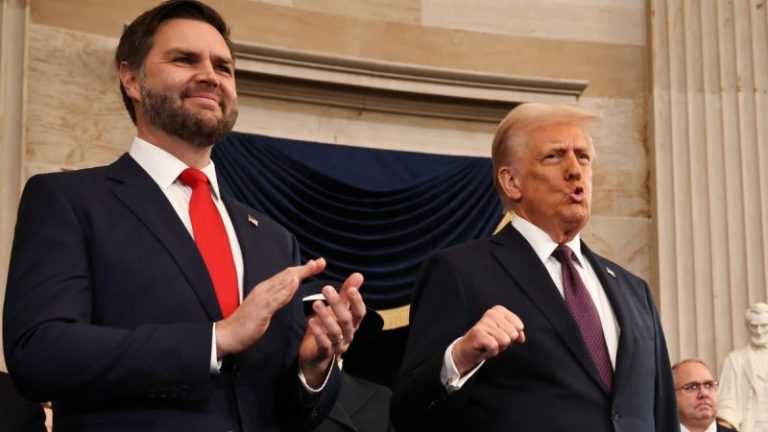
As the Trump administration appoints Vice President JD Vance to lead a nationwide ‘War on Fraud,’ a coalition of conservative state financial officers says it has already uncovered and stopped billions in taxpayer waste and is pledging to partner with the White House to root out corruption nationwide.

In a Thursday letter to the White House, the State Financial Officers Foundation (SFOF) praised President Donald Trump’s focus on what he called fraud scandals that have ‘resulted in tens of billions of dollars being stolen from American taxpayers,’ writing that such corruption ‘shreds the fabric of a nation’ 

SFOF CEO OJ Oleka told Vance that the group’s 40 conservative state treasurers, auditors and comptrollers across 28 states stand ready to support the administration’s anti-fraud mission, noting they collectively oversee more than $3 trillion in state funds.

The letter accompanied SFOF’s inaugural 2025 Oversight Report, which claims that affiliated state financial officers safeguarded more than $28 billion of waste, fraud, and abuse in 2025 alone.

The report highlights some of the most egregious examples within that $28 billion including in Florida, where Chief Financial Officer Blaise Ingoglia just under $2 billion in excessive spending and in Kentucky, where Auditor Allison Ball found more than $836 million in improper Medicaid payments.

Medicaid fraud has been of particular interest to the Trump administration given the massive fraud scandal that has unfolded in Minnesota and Vance said on Wednesday the administration has ‘decided to temporarily halt certain amounts of Medicaid funding that are going to the state of Minnesota in order to ensure that the state of Minnesota takes its obligations seriously to be good stewards of the American people’s tax money.’

The report also highlights North Carolina, where it says State Auditor Dave Boliek discovered more than $1 billion in lapsed salaries from long term vacancies in the state. Additionally, Utah auditor Tina Cannon identified more than $518 million in fraud, waste and abuse across agencies and nonprofits receiving state and federal funds.

In his letter, Oleka told Vance that SFOF’s members are ‘allies already on the battlefield’ and stand ready to assist the administration in protecting taxpayer dollars.

‘The American people deserve nothing less,’ he wrote.

SFOF argues that state-level financial watchdogs, often elected independently of governors and legislatures, are uniquely positioned to expose mismanagement and enforce fiscal discipline.

With billions already identified at the state level, the group says a coordinated federal-state approach could dramatically expand the scope of fraud detection nationwide, potentially reshaping how taxpayer dollars are safeguarded across the country.

‘By working together, we can protect our nation’s treasure to the fullest extent against every foe and every plot to endanger it,’ Oleka wrote.

Related Article

JD Vance spearheads ‘war on fraud,’ promises to root out taxpayer money ‘stolen’ by illegal immigrants
This post appeared first on FOX NEWS

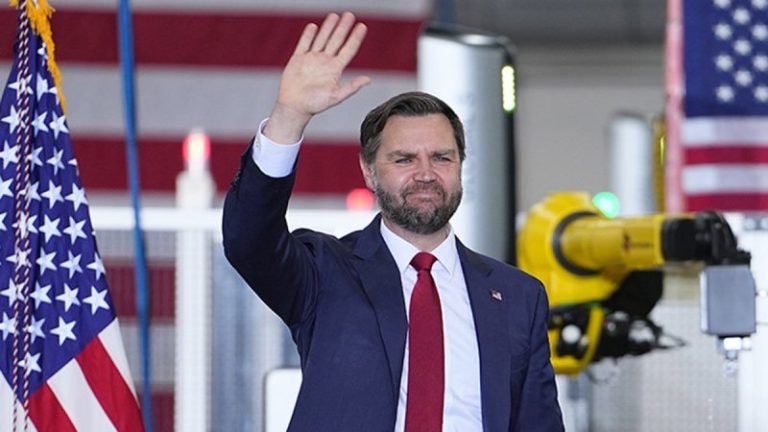
As President Donald Trump pressures Iran to abandon its nuclear ambitions amid rising tensions, Vice President JD Vance told The Washington Post there is ‘no chance’ the U.S. will enter a yearslong war in the Middle East.

‘The idea that we’re going to be in a Middle Eastern war for years with no end in sight — there is no chance that will happen,’ Vance said on Thursday, according to the outlet.

‘I think we all prefer the diplomatic option,’ he said, according to the Post. ‘But it really depends on what the Iranians do and what they say.’

‘I do think we have to avoid repeating the mistakes of the past. I also think that we have to avoid overlearning the lessons of the past. Just because one president screwed up a military conflict doesn’t mean we can never engage in military conflict again. We’ve got to be careful about it, but I think the president is being careful,’ Vance told the outlet.

Fox News Digital reached out to Vance’s office and the White House on Friday morning.

Trump said during his State of the Union address on Tuesday night, ‘My preference is to solve this problem through diplomacy. But one thing is certain: I will never allow the world’s number-one sponsor of terror — which they are by far — to have a nuclear weapon.’

In a Truth Social post regarding Iran on Monday, the president said that he ‘would rather have a Deal than not but, if we don’t make a Deal, it will be a very bad day for that Country and, very sadly, its people, because they are great and wonderful, and something like this should never have happened to them.’

Related Article

Iran rejects Trump demands despite ‘significant progress’ in nuclear talks
This post appeared first on FOX NEWS

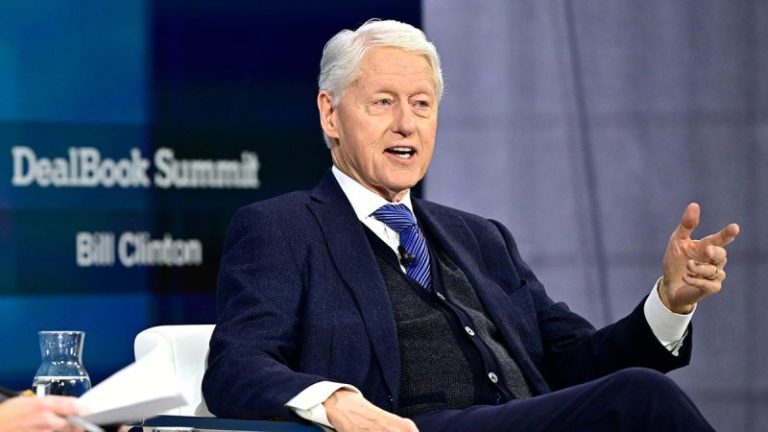
Former President Bill Clinton will testify to the House Oversight Committee in a high-stakes deposition for the committee’s probe into Jeffrey Epstein on Friday.

The closed-door meeting is expected to take place at 11 a.m. at the Chappaqua Performing Arts Center in Westchester County, N.Y.

Chappaqua has been the Clintons’ primary residence since they left the White House at the end of the former president’s tenure.

Republicans have been eager to question Bill Clinton about his ties to Epstein for months as the committee has gone back and forth with his lawyers about terms of the interview.

Both Democrats and Republicans are expected to grill Clinton, as well as committee staff on both sides.

His sitdown comes a day after his wife, former Secretary of State Hillary Clinton, appeared before the panel for her own lengthy deposition in the Epstein probe.

However, House Oversight Chairman James Comer, R-Ky., told reporters on Thursday that he anticipated Bill Clinton’s deposition would be ‘even longer’ than his wife’s.

He also stressed Thursday that neither of the Clintons are being accused of wrongdoing tied to Epstein.

‘No one’s accusing, at this moment, the Clintons of any wrongdoing. They’re going to have due process,’ Comer said. ‘But we have a lot of questions, and the purpose of the whole investigation is to try to understand many things about Epstein.’

Both depositions will be released on video sometime later.

Hillary Clinton told lawmakers in her opening statement that she could not recall any contact with Epstein, nor did she have any more information for the committee past what she sent in a Jan. 13 statement.

She also criticized the probe’s attention on her as a ‘fishing expedition’ and accused Republicans of trying to use her to pull attention from Trump.

‘A committee endeavoring to stop human trafficking would seek to understand what specific steps are needed to fix a system that allowed Epstein to get away with his crimes in 2008,’ she told the panel, according to her opening remarks.

‘But that’s not happening. Instead, you have compelled me to testify, fully aware that I have no knowledge that would assist your investigation, in order to distract attention from President Trump’s actions and to cover them up despite legitimate calls for answers.’

Unlike his wife, however, Bill Clinton had a well-documented relationship with Epstein before his federal probes related to prostitution of minors and sex trafficking.

Bill Clinton’s name and photo appear numerous times in documents released by the federal government on Epstein, and flight records show he did ride Epstein’s plane.

But neither he nor Hillary Clinton have been implicated in Epstein’s crimes.

The committee has also interviewed two former Trump administration officials, ex-Attorney General Bill Barr and ex-Labor Secretary Alex Acosta.

Their testimonies come weeks after the House nearly voted on holding both Clintons in contempt of Congress for defying Comer’s subpoena. House leaders dropped the effort after the Clintons said they would comply.

Related Article

Democrats dodge questions as House GOP prepares contempt votes against the Clintons
This post appeared first on FOX NEWS

The Department of Justice on Thursday sued five additional states, requesting that their election data be shared with the Trump administration amid its push for access to voter rolls from states across the country.

Four states President Donald Trump carried in the last three presidential elections — Utah, Oklahoma, Kentucky and West Virginia — were slapped with the latest legal action, along with New Jersey.

The DOJ has now sued more than two dozen states in efforts to access election records, with most of the states being controlled by Democrats.

Assistant Attorney General for Civil Rights Harmeet Dhillon suggested that state election officials were ‘choosing to fight us in court rather than show their work’ with voter roll access.

‘We will not be deterred, regardless of party affiliation, from carrying out critical election integrity legal duties,’ she said in a statement on Thursday.

‘The Justice Department will continue to fulfill its oversight role dutifully, neutrally, and transparently wherever Americans vote in federal elections,’ Dhillon said.

The Trump administration has intensified its efforts to take over elections in recent months even though the U.S. Constitution gives states, not federal officials, the authority to run elections. Most states have their secretary of state oversee elections.

Access to election information varies by state, but election officials generally release redacted versions of their voter rolls to the public and government agencies, according to Politico. However, the DOJ has demanded that states give the federal government unredacted files, including voters’ private data such as their driver’s license numbers and the last four digits of their Social Security numbers.

‘Accurate, well-maintained voter rolls are a requisite for the election integrity that the American people deserve,’ Attorney General Pam Bondi said in a statement. ‘This latest series of litigation underscores that this Department of Justice is fulfilling its duty to ensure transparency, voter roll maintenance, and secure elections across the country.’

The DOJ has argued the states are in violation of the Civil Rights Act of 1960, which affirms that the attorney general can request voter records from election officials, but state officials contend that the department is seeking an escalation of the administration’s wider attempts to become involved in state election proceedings.

‘Neither state nor federal law entitles the Department of Justice to collect private information on law-abiding American citizens. Utahns can be assured that my office will always follow the Constitution and the law, protect voters’ rights, and administer free and fair elections,’ Utah Lt. Gov. Deidre Henderson said in a statement to Politico.

Kentucky Secretary of State Michael Adams also criticized the lawsuit, saying the state’s elections were ‘a national success story.’

‘Kentucky law protects voters’ personal information, and I will not voluntarily commit a data breach by providing Kentuckians’ personal data to the federal bureaucracy unless a court order tells me to,’ he said in a statement to the outlet.

West Virginia Secretary of State Kris Warner’s office said it had not yet been served with a lawsuit.

‘Regardless, I think Secretary Warner’s comments to the DOJ were pretty clear. Bring it on! The federal government is not going to get any personal information on West Virginia voters as long as Kris Warner is Secretary of State,’ spokesperson Mike Queen said in a statement to Politico.

Earlier this month, the FBI executed a search warrant at an election office in Fulton County, Georgia, seizing ballots and other voting records from 2020, according to local officials. The Peach State went to former President Joe Biden in 2020, but Trump carried the state in 2024.

In efforts to ensure only American citizens are voting, Trump has also urged Congress to pass the SAVE America Act, which would require voters in federal elections to prove citizenship by providing a photo ID and other documentation, such as a passport or birth certificate.

Related Article

Georgia’s Fulton County files motion seeking return of 2020 election materials seized by FBI
This post appeared first on FOX NEWS

Clem Chambers, CEO of aNewFN.com, explains why he sold his gold and silver, and where he’s looking next, mentioning the copper and oil sectors.

He also speaks about the importance of staying positive as an investor: ‘The media negativity is the most wealth-crushing thing you can fall for. So be positive. Work hard at it. Be on the front foot. Look for opportunities. Think hard about it. Study. You will do so well.’

Securities Disclosure: I, Charlotte McLeod, hold no direct investment interest in any company mentioned in this article.

This post appeared first on investingnews.com
1911 Gold Corporation (‘1911 Gold’ or the ‘Company’) (TSXV: AUMB,OTC:AUMBF) (OTCQX: AUMBF) (FRA: 2KY) announces that, pursuant to the Company’s long-term incentive plan (the ‘LTIP’), it has granted stock options (the ‘Options’) to Suzette Ramcharan, an employee of the Company who provides investor relation services, to purchase 500,000 shares of the Company (the ‘Shares’) at a price of $1.15 per Share until February 25, 2031. The Options will vest ¼ three months after the date of the grant; ¼ six months after the date of the grant; ¼ nine months after the date of the grant; and ¼ twelve months after the date of the grant. The foregoing Options are subject to acceptance by the TSX Venture Exchange.

About 1911 Gold Corporation

1911 Gold is an advanced gold explorer and developer focused on its 100%-owned True North Gold Project in the Archean Rice Lake Greenstone Belt in Manitoba, Canada. The Company controls a large, highly prospective ~62,000-hectare land package with numerous past-producing gold operations within trucking distance of the fully built and permitted True North mine and mill complex. 1911 Gold is positioning itself to restart operations in 2027 and offers a unique, near-term production story with significant exploration upside. The strategy is to build a district-scale gold mining operation around a centralized, and readily expandable infrastructure to support a socially and environmentally responsible, long-term mining operation with little development risk and a growing mineral resource base.

1911 Gold’s True North complex and the exploration land package are located within and among the First Nation communities of the Hollow Water First Nation and the Black River First Nation. 1911 Gold looks forward to maintaining open, cooperative, and respectful communications with all of our local communities and stakeholders to foster mutually beneficial working relationships.

ON BEHALF OF THE BOARD OF DIRECTORS

Shaun Heinrichs
President and CEO

CAUTIONARY STATEMENT REGARDING FORWARD-LOOKING INFORMATION

This news release contains forward-looking information or forward-looking statements within the meaning of applicable securities laws (collectively, ‘forward-looking statements‘). Often, but not always, forward-looking statements can be identified by the use of words and phrases such as ‘plans’, ‘expects’ or ‘does not expect’, ‘is expected’, ‘budget’, ‘scheduled’, ‘estimates’, ‘forecasts’, ‘intends’, ‘anticipates’ or ‘does not anticipate’, or ‘believes’, or that describe a ‘goal’, or variations of such words and phrases, or statements that certain actions, events or results ‘may’, ‘could’, ‘would’, ‘might’ or ‘will’ be taken, occur or be achieved.

All forward-looking statements reflect the Company’s beliefs and assumptions based on information available at the time the statements were made. Actual results or events may differ from those predicted in these forward-looking statements. All of the Company’s forward-looking statements are qualified by the assumptions that are stated or inherent in such forward-looking statements, including the assumptions listed below. Although the Company believes that these assumptions are reasonable, this list is not exhaustive of factors that may affect any of the forward-looking statements.

Forward-looking statements involve known and unknown risks, future events, conditions, uncertainties and other factors which may cause the actual results, performance or achievements to be materially different from any future results, predictions, projections, forecasts, performance or achievements expressed or implied by the forward-looking statements, including, but not limited to, the terms of the Options, the ability of the Company to receive necessary regulatory approvals for the grant of the Options, and the planned restart of mining operations in 2027, and the timing of such event.

Although 1911 Gold has attempted to identify important factors that could cause actual actions, events or results to differ materially from those described in forward-looking statements, there may be other factors that cause actions, events or results not to be as anticipated, estimated or intended. There can be no assurance that forward-looking statements will prove to be accurate, as actual results and future events could differ materially from those anticipated in such statements. Accordingly, readers should not place undue reliance on forward-looking statements.

All forward-looking statements contained in this news release are given as of the date hereof. The Company disclaims any intention or obligation to update or revise any forward-looking statements whether as a result of new information, future events or otherwise, except in accordance with applicable securities laws.

Neither TSX Venture Exchange nor its Regulation Services Provider (as that term is defined in policies of the TSX Venture Exchange) accepts responsibility for the adequacy or accuracy of this release.

SOURCE 1911 Gold Corporation

View original content to download multimedia: http://www.newswire.ca/en/releases/archive/February2026/25/c5296.html

News Provided by Canada Newswire via QuoteMedia

This post appeared first on investingnews.com

Copper miners with productive assets have much to gain as supply and demand tighten.

The price of copper reached new all-time highs in 2026 on both the COMEX in the United States and the London Metals Exchange (LME) in the United Kingdom.

In 2025, the copper price on the COMEX surged during the third quarter as it climbed to US$5.94 per pound after the White House announced tariffs on the red metal in late August. However, prices moderated in August after refined products were excluded. However, as the quarter ended, supply and demand fundamentals took over, pushing the price back to historic highs, reaching US$11,067.50 per metric ton on the LME on October 29.

Since that time, the price has maintained momentum, and on January 29, the copper price reached record highs of US$6.61 per pound on the COMEX and US$14,572.54 per metric ton on the LME.

Copper is one of the most important resources for the energy transition, but demand for the red metal is outpacing mining supply. While construction and electrical grids have long been major markets for copper, today the rise in demand for electric vehicles, EV charging infrastructure and energy storage applications are emerging drivers of copper consumption.

Another trend driving future copper demand is the rapid urbanization in the Global South, as rural populations migrate to cities, putting pressure on electricity grids.

Due to the challenges associated with finding, developing, permitting and mining copper deposits, the higher demand is being met by slow growth of new supply. Mines that are in operation tend to be quite large and operate for decades as copper producers concentrate on mine expansions and brownfield projects aimed at extending mine lifetimes.

Given those factors, investors should keep an eye on the world’s top copper miners and their operations.

This list of the 10 largest copper-mining companies in the world is ranked by attributable copper production for 2024.

1. BHP (ASX:BHP,NYSE:BHP,LSE:BHP)

Copper production: 1.5 million metric tons

BHP is one of the world’s largest mining companies, and its global portfolio of assets includes significant copper mining operations in Chile, Australia and Peru.

According to the company’s quarterly operational review data, the mining giant’s attributable copper production totaled 1.5 million metric tons across the calendar year 2024.

Its most significant copper asset is the Escondida mine, the world’s largest copper mine. BHP holds a 57.5 percent stake in the Chilean operation, which produced 1.24 million metric tons of copper in 2024, of which 713,805 was attributable to BHP. Its other Chilean copper operation is its wholly owned Pampa Norte mine, which produced 313,600 metric tons of copper in 2024.

BHP also owns the Olympic Dam polymetallic mine, the largest mine in Australia. The South Australian mine hosts one of the world’s largest copper deposits as well as the largest uranium deposit. In 2023, BHP expanded its portfolio in the state with its acquisition of OZ Minerals and its Prominent Hill and Carrapateena copper operations.

In January, BHP announced its acquisition of Filo Mining and its Filo del Sol project located Argentina. As part of the announcement, BHP said it had formed a joint venture company with Lundin Mining Corporation (TSX:LUN,OTC Pink:LUNMF) to combine Filo del Sol with Lundin’s Josemaria project in the Vicuna mining district, with each company owning a 50 percent stake.

2. Codelco

Copper production: 1.44 million metric tons

The Chilean state-owned Codelco is the world’s third-largest producer with copper production of 1.44 million metric tons in 2024. According to its 2024 annual report, its copper output increased 1.2 percent from 1.42 million metric tons in 2023.

Its largest asset is the Chuquicamata mine located in Northern Chile, between 2017 and 2021 annual production was in the 700 million to 850 million pound range. However, lower grades in recent years have led to production falling below 600 million pounds. In 2024, Chuquicamata increased slightly to 637 million pounds.

The mine transitioned from an open pit to an underground mine beginning in 2019. In its operational report for the quarter ending September 30, the company stated that Phase 1 of its continuity infrastructure project had reached 85 percent completion. It added that feasibility studies were underway for potential expansion of the current mine level, as were prefeasibility studies assessing ‘the development of a potential deeper mine level.’

The company’s other significant Chilean mines include El Teniente, Quebrada Blanca and Andina.

3. Freeport-McMoRan (NYSE:FCX)

Copper production: 1.26 million metric tons

Freeport-McMoRan is consistently ranked among the world’s top copper producers, and its share of copper production from its mines totaled 1.26 million metric tons of copper in 2024. The company reported producing 4.21 billion pounds, or 1.9 million metric tons, of the red metal, calculated on a 100 percent basis for all operations except its Morenci joint venture.

The largest contributor to its output is the Grasberg copper-gold mine in Indonesia. The mine itself is a joint venture between Freeport and state-owned Indonesia Asahan Aluminum, with the entities holding interests of 48.76 percent and 51.24 percent respectively. According to MDO, copper output for the mine in 2024 totaled 1.8 billion pounds.

Grasberg has undergone a transition from an open pit to an underground block cave, and expansion work continues at the site. As of the close of 2024, the mine had 469 open drawbells.

In September, the main Grasberg Block Cave suffered an ingress of wet material that killed seven workers and forced the closure of the operation. While Freeport stated that unaffected portions of Grasberg would open by the end of 2025, the Grasberg Block Cave would see a phased restart beginning in the second quarter of 2026, and increasing through the end of the year and into 2027.

Additionally, Freeport holds a 55 percent stake in the Cerro Verde copper-molybdenum complex in Peru. The mine routinely produces between 800 million and 1 billion pounds of copper and is expected to be in operation until 2052.

Its largest US based operation is its 72 percent owned Morenci mine in Arizona, which produced 700 million pounds in 2024. It also owns the Safford and Sierrita mines in the same state.

4. Glencore (LSE:GLEN,OTC Pink:GLCNF)

Copper production: 951,600 metric tons

Mining major Glencore copper production dipped by 6 percent in 2024 to 951,600 metric tons from the 1.01 million metric tons produced in 2023. The company’s 2024 annual report attributed the decline to lower planned production at its Antapaccay and Collahuasi mines due to factors including lower grades, water constraints and geotechnical challenges.

Located along Chile’s coast, Collahuasi is the company’s largest operation, a 44/44/12 joint operation between Glencore, Anglo American (LSE:AAL,OTCQX:NGLOY) and Japan’s Mitsui & Co. (OTC Pink:MITSF,TSE:8031). The mine produced 558,600 metric tons of copper in 2024.

The partners are working to build a large-scale desalination plant designed to help overcome water shortage issues. In Glencore’s third-quarter production report, it indicated that water restrictions at Collahuasi have eased since the staged commissioning started, with further improvements through Q4. Once open, it will provide 1,050 liters of desalinated water per second to the mine via a 194 kilometer pipeline.

Other significant copper-producing assets in the company’s portfolio include Antamina in Peru, Mount Isa in Australia and the Katanga Complex in the Democratic Republic of the Congo.

5. Southern Copper (NYSE:SCCO)

Copper production: 883,462 metric tons

A majority-owned, indirect subsidiary of Grupo Mexico (OTC Pink:GMBXF), Southern Copper recorded 883,462 metric tons of total copper production for 2024, a 6.9 percent increase over 2023. In the company’s 2024 results, the company attributed the increase to higher production across all operations, with a 10.7 percent increase from its Peruvian assets and a 4.3 percent increase from Mexican production.

The company operates major copper mines in Peru and Mexico and has exploration projects in Argentina, Chile, Ecuador, Mexico and Peru.

Its largest copper-producing asset is the Buenavista mine in Northern Mexico, which sits atop one of the world’s largest porphyry copper deposits. According to MDO, the site produces approximately 700 billion to 750 billion pounds of copper per year.

Its other copper operations include the Cuajone and Toquepala mines in Peru and the La Caridad mine in Mexico.

6. Anglo American (LSE:AAL,OTCQX:NGLOY)

Copper production: 772,700 metric tons

British miner Anglo American reported a 6.5 percent decrease in copper production to 772,700 metric tons from 826,200 metric tons in 2023.

The company attributed the decline to lower recovery and grades at the Collahuasi and Los Bronces operations in Chile, noting that the planned closure of the Los Bronces processing plant also impacted production. The company holds a 44 percent stake in Collahuasi and 50 percent in Los Bronces.

In addition to Collahuasi, the company also owns a 60 percent stake in the Quellaveco mine in Peru, with Mitsubishi owning the remaining 40 percent. The open pit mine started operating in 2022 and, according to MDO, produced 675 million pounds of copper in 2024.

It also owns a 50 percent stake in the El Soldado mine in Chile, which it operates in partnership with Mitsui, which holds a 30 percent stake, and Mitsubishi Materials (OTC Pink:MIMTF), which holds the remaining 20 percent. Data from MDO shows that the mine produced 48,200 metric tons of copper in 2024.

On September 9, Anglo American announced plans to combine with Canadian mining giant Teck Resources (TSX:TECK.A,TECK.B,NYSE:TECK) in a ‘merger of equals’ to form Anglo Teck, which would be headquartered in Canada. The merged company would focus on critical minerals and become a top-five global copper producer.

7. KGHM Polska Miedz (FWB:KGHA.F)

Copper production: 729,700 metric tons

Poland’s KGHM Polska Miedz has operations in Europe, North America and South America, and says that it controls over 40 million metric tons of copper ore resources worldwide. In 2024, KGHM produced 729,700 metric tons of copper, a slight increase from the 710,900 metric tons of copper produced in 2023.

According to MDO, KGHM’s largest operation is the Polkowice-Sieroszowice mine in Western Poland. The mine has been in operation since 1968 and produces approximately 430 million to 440 million pounds of copper annually.

The company’s Polish operations also include the Rudna mine, which produced 338 million pounds of copper last year, and the Lubin mine, which produced 156 million pounds.

Other options under the KGHM banner include the Robinson mine in Nevada, United States, and the 55 percent owned Sierra Gorda mine in Chile.

8. CMOC Group (OTC Pink:CMCLF,HKEX:3993)

Copper production: ~502,600 metric tons

CMOC Group is a new addition to the top 10 after its copper production jumped significantly in 2024, with its share of production from its joint venture copper-cobalt mines in the Democratic Republic of the Congo totaling approximately 502,600 metric tons. On a 100 percent basis, the company reported annual copper production of 650,161 metric tons.

The majority of CMOC’s copper production came from its Tenke Fungurume copper-cobalt mine, an 80/20 joint venture with the state-owned mining firm Gecamines. According to MDO data, the mine has experienced significant growth over the past few years, ramping up from 400 million pounds of copper in 2020 to 618 million pounds in 2023. In 2024, Tenke Fungurume’s copper production soared to 992 million pounds, or 450,138 metric tons.

Its other DRC mine is Kisanfu, a 71/24/5 joint venture with Chinese battery manufacturer Contemporary Amperex Technology (SZSE:300750) and the DRC government. The mine produced 200,013 metric tons of copper cathode in 2024, up substantially from 114,000 in 2023.

9. Antofagasta (LSE:ANTO,OTC Pink:ANFGF)

Copper production: 448,800 metric tons

Antofagasta’s share of copper production from its four joint venture operations in Chile totaled 448,800 metric tons in 2024.

The company’s largest operation is its 60 percent owned Los Pelambres mine, a joint venture with Mitsubishi. According to MDO, Los Pelambres’ copper production totaled 320,000 metric tons in 2024, up from 300,000 the previous year.

Its Centinela mine is another significant producer, with 224,000 metric tons of copper mined in 2024. The company is constructing a second concentrator at Centinela that, once it comes online in 2027, should add 144,000 metric tons of copper production annually and extend Centinela’s mine life by 15 years to 2051.

The company’s other Chilean joint ventures are the Antucoya and Zaldivar mines.

10. Teck Resources (TSX:TECK.A,TECK.B,NYSE:TECK)

Copper production: 358,910 metric tons

Rounding out the top 10 is Canada’s Teck Resources, which increased consolidated copper production by 50 percent in 2024, reaching 446,000 metric tons. On an attributable basis, the copper company’s production totaled 358,910 metric tons in 2024.

Much of the gain came from the ramp-up of the Quebrada Blanca mine in Chile. The mine started production in 2023 and produced just 122 million pounds of copper that year. 2024 saw a significant advancement, with the mine producing 458 million pounds of the red metal.

Teck holds a 60 percent ownership stake in the mine, while Japan’s Sumitomo (OTC Pink:SSUMF,TSE:8053) controls a 30 percent stake and Chile’s state-run Codelco owns the final 10 percent.

Teck also owns the Highland Valley mine in British Columbia, Canada. The mine is one of the largest open pit mines in Canada and produced 226 million pounds of copper in 2024.

Other copper operations in the Teck portfolio include Antamina in Peru and Carmen de Andacollo in Chile.

On September 8, Teck announced a planned merger of equals with Anglo American to focus on critical minerals and copper production. The combined company is set to be called Anglo Teck and will be headquartered in Canada. The merger is expected to take 12 to 18 months to be completed.

Securities Disclosure: I, Dean Belder, hold no direct investment interest in any company mentioned in this article.

This post appeared first on investingnews.com

Precious metals are recovering their safe-haven demand appeal this week.

Gold, silver and platinum are up this week, all still down from the all-time highs recorded in January. Escalating geopolitical tensions and US trade policy shifts are once again at center stage in this sector of the commodities market.

Let’s take a look at what’s got the precious metals moving over the past week.

Gold price

After dropping as low as US$4,400 per ounce on February 2, this past week gold has taken another run well above the key psychological US$5,000 mark; albeit still hundreds of dollars away from its record high of close to US$5,600 reached on January 28.

After trading in a tight range of US$4,985 to US$5,000 for much of Thursday (February 19), the price of gold managed to rise as high as US$5,107 on Friday. That upward climb continued on Monday (February 23) to an intraday high of US$5,248 — a level gold hasn’t seen in a month.

The yellow metal lost that steam by Tuesday’s close with the precious metal trading back down at US$5,143. By Wednesday morning, gold was once again making a run at the US$5,200 level to reach an intraday high of US$5,217.58 at 9:10 a.m. PST. However, it couldn’t hang on for long, sinking back down to US$5,166.25 as of 1:40pm PST on profit-taking and a stronger dollar.

Gold price chart, February 18, 2026 to February 25, 2026.

Here are the primary drivers for gold this past week:

      • Dips this week were brought on by slight downward pressure due to profit-taking and a stronger US dollar.

      In other gold news, JPMorgan Chase (NYSE:JPM) raised its gold forecast to US$6,300 by the end of 2026, citing a ‘reserve currency paradigm shift’ as countries diversify away from the dollar, and ‘significant investor diversification’.

      Looking at major events in the gold mining sector, Kinross Gold’s (TSX:K,NYSE:KGC) Great Bear development in the Red Lake district of Ontario, Canada, has been designated for a reduced permitting timeline under the provincial government’s One Project, One Process (1P1P) framework. 1P1P is a streamlined approval system aimed at reducing government review times by 50 percent. The high-grade, combined open-pit and underground operation is expected to produce more than 500,000 ounces of gold annually during its peak years.

      Silver price

      The price of silver is still well below its all-time high of more than US$120 per ounce it reached on January 29, 2026. For the most part, the white metal continued to track the same trends as gold this week.

      Like gold, silver traded sideways Thursday (February 19) in the US$77.50 to US$78.50 range, and then surged the following day to an intraday high of US$84.61.

      For most of Monday (February 23), silver continued higher but at a much slower pace, to reach as high as US$88.96. Tuesday brought another day of tight trading in the US$86.70 to US$88.10; however, by Wednesday morning the silver price had managed to break through the US$90 level on the same safe-haven demand forces pushing gold prices higher this week.

      The price of silver hit an intraday high of US$91.15 at 11:55am PST before sliding back down below US$89 in the afternoon session.

      Silver price chart, February 18, 2026 to February 25, 2026.

      Silver may still not be back into the triple digits, but its showing strong support despite a slump in artificial intelligence (AI) tech stocks. Silver, the most electrically and thermally conductive metal on the planet, is considered a key material for AI tech, particularly in data centers and high-performance computing. Silver is also in a structural supply deficit which continues to provide upward pressure on silver prices

      In silver mining news, Lundin Gold (TSX:LUG,OTCQX:LUGDF) announced a US$670 million silver stream deal with LunR Royalties (TSXV:LUNR) on its Fruta del Norte mine.

      Platinum price

      Platinum continues to be one of the top performing metals, reaching a 12-year high in recent weeks. This past week it has gained more than 8 percent. Sideways trading on Thursday (February 19) turned into an upward climb on Friday with prices for platinum rising from a low of US$2,060.10 to a high of US$2,117.40 per ounce.

      The first few days of this new week were marked by volatility with wider price swings. The platinum price reached a three week high of US$2,226.30 in late day trading Tuesday. The jump was driven by a combination of geopolitical tensions, trade uncertainty, and structural supply constraints.

      Platinum continued its ascent in overnight trading, reaching as high as US$2,360.50 in early morning trading, and managed to finish off the day just below the US$2,300 level.

      Platinum price chart, February 18, 2026 to February 25, 2026.

      Platinum prices are benefitting from renewed tariff jitters, geopolitical safe-haven demand, and persistent supply tightness from major producer South Africa.

      The emerging hydrogen economy is also adding to demand for the metal on top of robust demand from the auto sector. Consumers are shifting back toward internal combustion engine and diesel vehicles as hurdles to EV adoption remain challenging. This is highly supportive of demand for platinum as its primary use is in automotive catalysts.

      On the supply side, global platinum reserves remain critically low, especially as the world’s biggest producer South Africa continues to be plagued by power shortages and operational disruptions.

      In platinum mining news, Valterra Platinum declared a dividend of 45 rand a share for a total 2025 payout of 12 billion rand (US$757 million) after its net income more than doubled to 15.4 billion rand. Bloomberg reported that the size of the dividend “smashed analyst expectations as earnings jumped last year on soaring metals prices”.

      Palladium price

      Palladium has been the black sheep of the precious metals family for the past few years, remaining well below its March 2022 all-time record of US$3,440.76 per ounce.

      On Thursday (February 19), unlike its sister metals, palladium rallied 4.8 percent to an intraday high of US$1,767.50. The metal closed out last week with another nearly 3.9 percent gain to US$1,836.

      On Monday, palladium lost some of that ground to close out the day at US$1,820. After dipping to a low of US$1,763 in early morning trading on Tuesday, the price of the metal regained those losses and more by the end of the trading day reaching as high as US$1,843.

      Wednesday (February 25) morning brought a spike in palladium prices to US$1,935 as the metal went along for the same ride as platinum, before falling back to the US$1,860 level in afternoon trading.

      Palladium price chart, February 18, 2026 to February 25, 2026.

      As is the case with platinum, demand for palladium is getting support from the auto sector. Rising prices for platinum are leading automakers to make the swap to palladium.

      The US Department of Commerce’s preliminary statement of support for anti-dumping duties of approximately 133 percent on unwrought Russian palladium imports is still shaping the outlook for palladium on the supply side. This follows a petition from Sibanye-Stillwater (NYSE:SBSW) over allegations that Russian metal is being sold in the US at less than fair value. A final decision is expected in the case by June of this year.

      Securities Disclosure: I, Melissa Pistilli, hold no direct investment interest in any company mentioned in this article.

      This post appeared first on investingnews.com
      Dubbed a “central bottleneck of the electrified future,” copper demand is expected to far exceed supply. A recent outlook from S&P Global projects the market could face a shortfall of up to 10 million metric tons by 2040.

      Against this backdrop, Domestic Metals (TSXV:DMCU) offers a timely opportunity for investors. Listed on TSX Venture Exchange, OTCQB and Frankfurt Stock Exchange, the company is advancing its flagship Smart Creek Project in Montana, targeting discovery of a porphyry system and a carbonate replacement deposit (CRD).

      Smart Creek’s potential is further bolstered by its proximity to significant discoveries like Ivanhoe Electric’s (NYSEAmerican:IE,TSX:IE) Hog Heaven project, which announced the intersection of a porphyry copper-gold-molybdenum system within a large, deep anomaly.

      Company Highlights

      • Exceptional Surface Grades: The 2025 field campaign returned high-grade samples, highlighted by 102 g/t gold, 23.1 percent copper, and 3,810 g/t silver.
      • World-Class Team: Dr. Peter Megaw, a globally recognized authority on Carbonate Replacement Deposits (CRDs) and discoverer of MAG Silver’s Juanicipio, has joined the team to guide exploration, together with President & CEO Gordon Neal who has had a successful track record building MAG Silver and New Pacific Metals
      • Mining-Friendly Jurisdiction: Operations are focused in Montana, USA, a mining-friendly state ranked 6th in 2024 by the Fraser Institute for investment attractiveness, with a legacy of massive production at the nearby Butte Mine.

      This Domestic Metals profile is part of a paid investor education campaign.*

      Click here to connect with Domestic Metals (TSXV:DMCU) to receive an Investor Presentation

      This post appeared first on investingnews.com